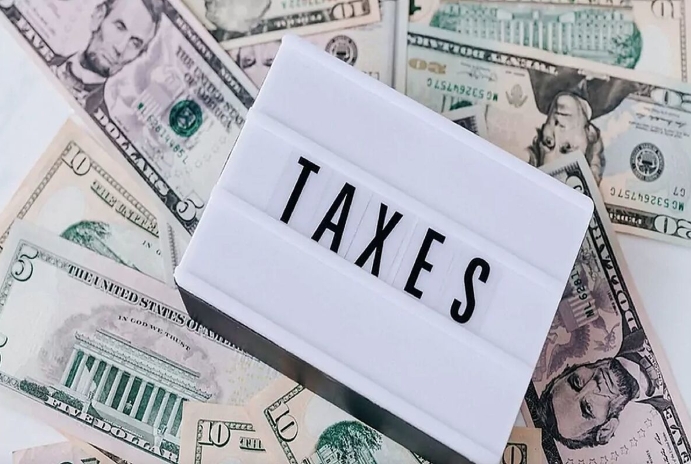
Towards the very end of my book, Who Do You Help?, one of the characters, Greta, asks her friend, Linda, this question:
“Should I not pay taxes on my donations?”
The scene isn’t really about the question, as the question is merely a way of extracting Linda from her laptop and leads to a more important conversation, but it isn’t a complete throwaway.
I just don’t think you should be thinking about tax relief when you donate to charity.
Maybe I’m just a purist or sentimental, but when you give to charity, you are doing so out of the goodness of your heart in an attempt to make someone’s life or the world better in some way, and you aren’t looking for anything in return except the reward of knowing you helped somebody.
Deducting such donations from your taxes is like asking for a discount on your donation.
Now, it’s not that I’m against discounts. If I went to buy a cheeseburger or tickets to a show and someone offered me 20% off, I’m not going to say no.
I just feel charitable donations should be a discount-free zone.
Granted, that’s not how our tax code is written. In theory, the tax code is written with tax credits and deductions allowed for activities it feels are in the best interest of the person and society. Like retirement funds, for example.
That’s the same argument for deducting charitable donations.
And such incentives do make an impact. An Indiana study found that after changes to tax policy were made, a $16-20 billion drop in giving occurred in 2018 (for context, though, GivingUSA still states $410 billion was donated in 2018).
You may tell me to look at the study, man, cool it with the sentimentality, and be practical and get as many people to donate as possible.
Fair point, but I think there are a few rebuttals.
One is…that you’re right. I am being sentimental. I think if you are coming at your charitable giving with an altruistic lens, then I do think it’s best to stay purely altruistic. In a similar vain, if you are purchasing something, like concert tickets, for fun, you aren’t expecting the government to help subsidise your purchase. Why should you give money to help somebody eat and then ask the government for some money in return?
Maybe I can’t articulate it well, but it just feels icky, at least to me, when you dig beneath the surface.
Second point would be that the study doesn’t focus on the counterfactual. How much was gained in taxes from not providing as generous of deductions for charitable giving?
The government is far from a well-oiled machine, but it is a machine we all need and depend on, and, in turn, it depends on us for taxes. I know that not all my taxes are going to things I like, see ICE, but I know some of it is going towards keeping the U.S.’s lights on, the roads paved, Medicaid/Medicare, food stamps, etc.
I also know that charity is a loose term and not every donation is going to someone in need or to a cause you agree with. So, just because the ability to deduct donations from your taxes increases giving, doesn’t mean all that money will go to things you like, just like you aren’t going to like where all your taxes go.
Lastly, just to build off my second point, being able to deduct your taxes is just one of the ways the ultra-rich avoid taxes. They create private foundations, donor-advised-funds, and pay themselves through ways I don’t understand. A study by inequality.org even found that, when including capital gains revenue lost from the donation of appreciated assets (another thing I don’t understand), we are likely missing out on several hundreds of billions of dollars each year from the ultra-rich’s “donations”.
Okay, deep breath. In and out. In and out. Good. Sometimes I can spiral on this topic, and when I get to the several hundred billion dollar stage, that’s usually where I have to quit.
Look, if I didn’t convince you not to deduct your donations on your next tax filing, I get it. Free money is hard to turn down, and it’s legal. Just because I disagree with your decision, doesn’t mean I think you are a bad person, but before you go and ditch me for Netflix, TikTok, Youtube, or to watch another clip of KPop Demon Hunters (the songs are undeniably catchy), let me just leave you with Greta and Linda’s conversation and see if Greta can convince you.
“Should I not pay taxes on my donations?” Greta said, attempting to balance her large glasses on the bun atop her head. The attempt failed, and they slipped to the floor.
“Sure, you can not pay taxes if you want to. It’s called deducting it from your taxes,” Linda said from her chair, only half paying attention.
She was scanning the internet for job postings in Cleveland and wasn’t in a mood to talk. It was still a week before she got her job, and inadequacy consumed her. She swiveled aimlessly in her chair.
A loud fart-mimicking noise came from Greta, who hadn’t even tried to pick back up her glasses.
“Do you think motherhood has made you somehow less mature?” Linda said.
“Not possible. I think I was already at the lowest level. But anyway, don’t distract me. I’m very distractible these days,” Greta said, drumming her belly with her hands. “I know what tax deductions are, Linda Reagan, but I’ve been thinking whether I should morally do it?”
“Like, hear me out,” Greta said, as if Linda had launched some objection. She laid flat on her back, throwing a rainbow toy ball up and down in the air. “Charities, non-profits, activist groups, whatever. They all exist because society is imperfect. Therefore, if I don’t pay taxes on my donations, then I am taking money that could go to society to fund education or whatever, and instead I’m using it to give to some organization to attempt to make society better. It kind of defeats the purpose, right? Or am I just crazy?”



 Randy Knoewman Writes
Leave a comment